
Every April, Alcohol Awareness Month gives people a reason to slow down and take an honest look at alcohol and the way it affects individuals, families, and entire communities. For some, alcohol starts as a social habit. For others, it becomes a way to cope with stress, numb pain, quiet anxiety, or escape what feels too heavy to face. Over time, what once felt manageable can begin to take over more and more of a person’s health, judgment, relationships, and sense of purpose.
Alcohol Awareness Month exists to bring these struggles into the light. It is a reminder that alcohol misuse is common, dangerous, and often misunderstood, but also that help is available and recovery is possible. For those struggling with alcohol addiction, awareness alone is not the final answer. Still, it can be the first step toward truth, support, and lasting change.
How Alcohol Awareness Month Began
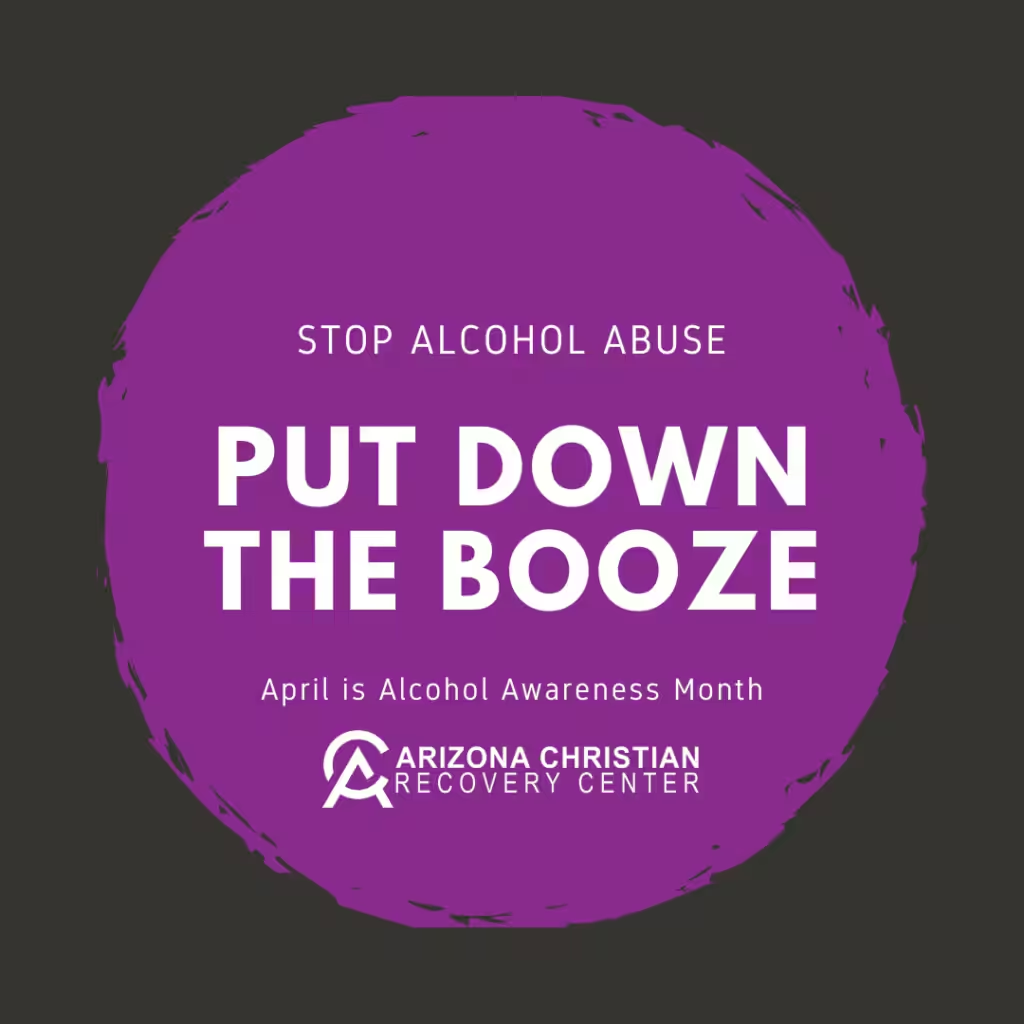
Alcohol Awareness Month was established in 1987 by the National Council on Alcoholism and Drug Dependence to increase public understanding of alcoholism, alcohol-related harm, and the need for treatment and education. Since then, April has become a time for families, treatment providers, and communities to have more honest conversations about drinking, addiction, and recovery.
Today, that awareness matters as much as ever. Alcohol is still one of the most commonly used substances in the United States, and alcohol misuse continues to affect millions of people every year through health problems, injuries, family disruption, mental health decline, and preventable death.
Alcohol Use in the United States by the Numbers
Alcohol misuse is much more common than many people realize, and the numbers help show why Alcohol Awareness Month still matters.
- 134.7 million people age 12 and older reported current alcohol use in 2023
- 61.4 million reported binge drinking in the past month
- 16.4 million reported heavy drinking
- 27.1 million adults ages 18 and older had alcohol use disorder in the past year
- 178,000 deaths each year in the United States are linked to excessive alcohol use
These numbers reflect a reality many families already know firsthand: alcohol-related harm is widespread, and it can affect people from every background, every age group, and every walk of life.
What Is the Difference Between Alcohol Abuse, Alcoholism, and Alcohol Use Disorder?
Many people still use terms like alcohol abuse or alcoholism, but the medical term most often used today is alcohol use disorder, or AUD. Alcohol use disorder is a medical condition marked by difficulty controlling alcohol use even when it is causing serious harm in a person’s life. It can range from mild to severe.
In everyday language, people often use the word alcoholism to describe a severe pattern of alcohol dependence. No matter which term a person uses, the deeper issue is the same: alcohol has started to control thoughts, choices, emotions, relationships, or physical well-being in a way that is damaging and difficult to stop.
What Counts as Binge Drinking?
A lot of people are surprised to learn that binge drinking has a clinical definition. It is not simply drinking too much at a party or having a rough weekend. Binge drinking generally means 4 or more drinks for women or 5 or more drinks for men on one occasion.

That matters because many people dismiss serious alcohol patterns simply because they are not drinking every day. A person can still have a dangerous relationship with alcohol even if their drinking is mostly happening on weekends, at social events, or during periods of stress.
What Alcohol Really Does to the Body
Alcohol affects far more than mood or behavior. It impacts nearly every major system in the body, and the effects can build over time.
Brain and nervous system effects
Alcohol slows communication in the brain and affects judgment, memory, reaction time, coordination, and impulse control. That is part of why drinking can lead to risky choices, blackouts, accidents, and impaired decision-making. Over time, heavy drinking can also reinforce compulsive patterns that make it even harder to stop.
Mental and emotional health effects
Alcohol is a depressant, which means it can worsen anxiety, increase irritability, deepen depression, and make emotional regulation more difficult. Many people drink to feel temporary relief, but alcohol often intensifies the very emotional pain they were trying to escape in the first place.
Liver damage
One of the most recognized effects of alcohol is the damage it can do to the liver. Heavy drinking can contribute to fatty liver disease, alcoholic hepatitis, fibrosis, and cirrhosis. Alcohol-related liver disease remains a serious public health issue and is responsible for thousands of deaths each year.
Heart and cardiovascular effects
Alcohol can raise blood pressure and increase the risk of irregular heartbeat, cardiomyopathy, and stroke. These effects are not always obvious early on, which is part of what makes long-term alcohol misuse so dangerous.
Pancreas and digestive system effects
Heavy alcohol use can inflame the pancreas and increase the risk of pancreatitis. It can also disrupt digestion, nutrient absorption, and overall gut health, leaving the body depleted in ways a person may not immediately connect back to drinking.
Immune system effects
Alcohol can weaken the immune system, making it harder for the body to fight illness and recover properly. Over time, that can leave a person more vulnerable physically while also making healing slower and more difficult.
Cancer risk
Alcohol is also linked to cancer risk. Public health data show that alcohol use is associated with several types of cancer, and alcohol-related cancers account for tens of thousands of deaths each year in the United States.
Signs Alcohol Has Become a Bigger Problem
Sometimes people assume that alcohol addiction only applies when everything has completely fallen apart. In reality, the warning signs often show up long before that point.
A person may be struggling with alcohol if they are drinking more than they planned, trying to cut back but failing, hiding how much they drink, experiencing blackouts, using alcohol to cope, needing alcohol to relax or sleep, or continuing to drink even though it is hurting their work, relationships, finances, health, or spiritual life.
The truth is that someone does not have to lose everything before getting help. If alcohol is already taking peace, clarity, health, or integrity from your life, that is enough reason to take it seriously.
Can Alcohol Withdrawal Be Dangerous?
Yes. Alcohol withdrawal can be dangerous, and in some cases, it can become a medical emergency. Symptoms may include shaking, sweating, nausea, anxiety, agitation, insomnia, and in severe cases, seizures or delirium tremens. Because of these risks, alcohol detox should not be treated casually for people with heavy or long-term alcohol use.
That is one reason medically monitored detox matters. A safe detox environment gives people support through withdrawal while reducing the medical risks that can come with trying to stop on their own.
The Spiritual Side of Alcohol Addiction
Alcohol addiction is physical, emotional, relational, and spiritual. For many people, drinking is not just a substance problem. It becomes a place of bondage. It clouds judgment, weakens self-control, distorts identity, damages trust, and creates distance from God, truth, and peace.
Some Christians describe alcohol as a “spirit.” That is not a scientific statement about the substance itself. It is a spiritual way of describing the grip alcohol can have on a person’s life. What starts as relief can become control. What starts as escape can become captivity.
The Bible speaks clearly about intoxication and the dangers of surrendering ourselves to something that gains power over us.
Proverbs 20:1 says, “Wine is a mocker, strong drink is raging: and whosoever is deceived thereby is not wise.”
Ephesians 5:18 says, “And be not drunk with wine, wherein is excess; but be filled with the Spirit.”
1 Corinthians 6:12 says, “All things are lawful unto me, but all things are not expedient… I will not be brought under the power of any.”
That last verse speaks deeply to addiction. Alcohol may promise comfort, but it often ends by taking authority it was never meant to have. Recovery is not only about removing alcohol. It is also about reclaiming truth, healing what has been broken, and learning to live surrendered to God instead of enslaved to something destructive.
Why Alcohol Awareness Month Matters for Families
Alcohol addiction rarely affects only one person. Families often carry the confusion, fear, exhaustion, anger, and heartbreak that come with a loved one’s drinking. Alcohol Awareness Month helps families put words to what they are seeing and reminds them that they are not alone.

For some families, awareness becomes the beginning of a necessary conversation. For others, it becomes the point where they stop minimizing the problem and start looking for real help. In either case, awareness matters because honesty matters.
What Kind of Treatment Helps With Alcohol Addiction?
The right treatment depends on the person, the severity of alcohol use, whether withdrawal is a concern, the presence of mental health symptoms, relapse history, and the level of structure needed for real stability.
At Arizona Christian Recovery Center, individuals struggling with alcohol addiction have access to a full continuum of care in Mesa and Chandler, including:
- Detox for safe withdrawal support and stabilization
- Residential treatment for immersive, structured care
- Partial Hospitalization Program (PHP) for a high level of support during the day
- Intensive Outpatient Program (IOP) for continued treatment with more flexibility
That continuum matters because recovery is not one-size-fits-all. Some people need the safety and stabilization of detox first. Some need the daily structure and immersion of residential treatment. Others benefit from PHP or IOP as they continue building sober routines, relapse prevention skills, emotional stability, and spiritual strength.
When to Reach Out for Help
You do not have to wait until everything falls apart to ask for help.
If alcohol is changing your health, affecting your mind, damaging your relationships, weakening your walk with God, or making you feel trapped in cycles you cannot break on your own, it is time to take that seriously. Reaching out is not weakness. It is wisdom.
Alcohol Awareness Month is a reminder that the cost of staying silent is often far greater than the cost of asking for support. Recovery begins when a person stops hiding, stops minimizing, and starts moving toward the truth.
A Hopeful Way Forward
Alcohol can take more than people expect. It can wear down the body, cloud the mind, harden the heart, strain the family, and slowly pull a person away from the life God intended for them. But that is not the end of the story.
Healing is possible. Sobriety is possible. Freedom is possible.
At Arizona Christian Recovery Center, we believe lasting recovery begins with truth, surrender, and the right support. For those struggling with alcohol addiction, there is a path forward grounded in compassionate care, clinical guidance, and faith.
This April, Alcohol Awareness Month can be more than a yearly observance. It can be the moment someone stops hiding, asks for help, and takes the first step toward a different life.